
Evidence Driven Innovation to Meet the Demands of Ending TB in the Global South — The Innovation Alliance Showcasing China's Technological Prowess at the Union World Conference on Lung Health
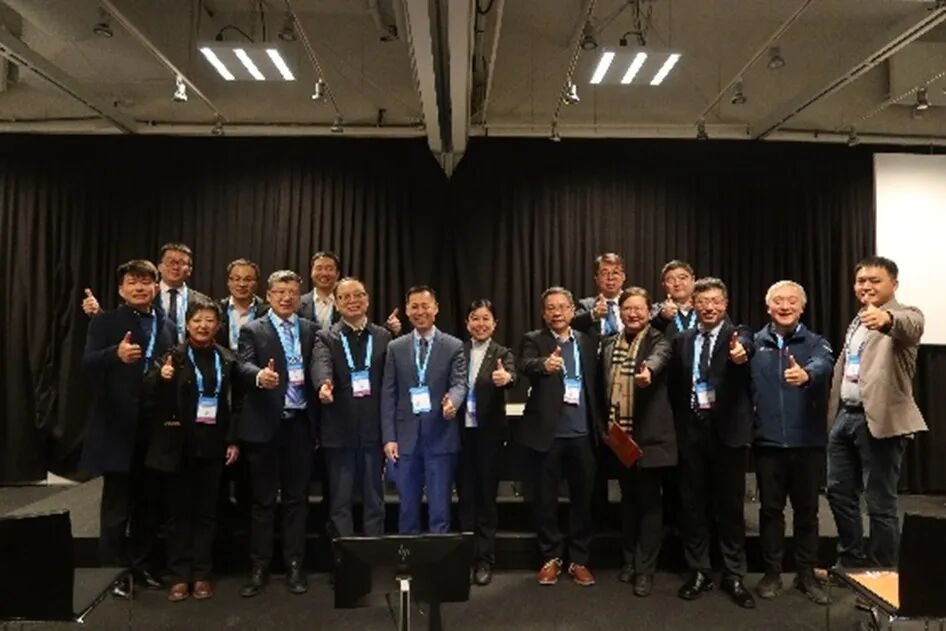
On November 19, 2025, at the Bella Center, Copenhagen, the Kingdom of Denmark, the Innovation Alliance on Tuberculosis Diagnosis and Treatment (Beijing) (hereinafter referred to as the Innovation Alliance), together with six leading Chinese enterprises engaged in tuberculosis research and innovation, hosted a special technology sharing session titled Bridging the Gaps with Chinese Innovation: Advancing TB Detection Through Novel Diagnostic Technologies at the 2025 Union World Conference on Lung Health (The Union Conference). Following the successful joint technology exhibition and satellite sessionheld at The Union Conference in Bali, Indonesia in 2024, the Alliance once again partnered with six top domestic in vitro diagnostic companies specializing in tuberculosis testing R&D, namely Coyote Bioscience (Beijing), Pluslife Biotech (Guangzhou), LeideBiotech (Guangzhou), Ustar Biotechnologies (Hangzhou), Shengting Medical Technology (Hangzhou), and Hugo Biosciences (Beijing). The team brought China’s innovative TB diagnostic solutions to the global stage in Copenhagen.
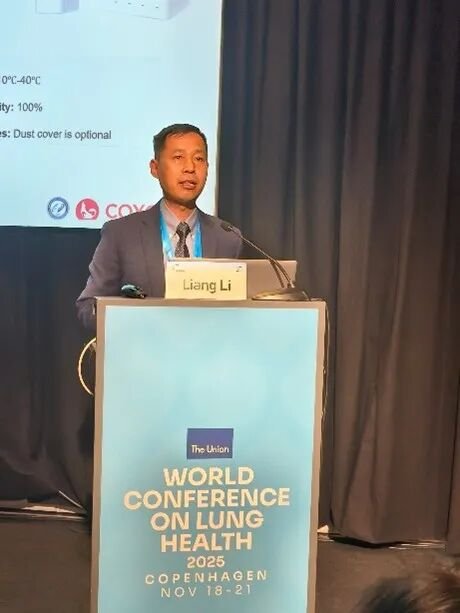
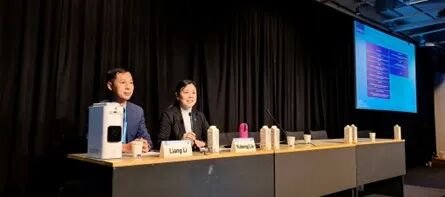
The session was co-chaired by Professor Liang Li, Chairman of the Innovation Alliance and deputy director of the Beijing Chest Hospital, Capital Medical University, and Professor Yuhong Liu, Vice Chairman of the Innovation Alliance. In his opening address, Professor Li noted that China has yielded fruitful outcomes in tuberculosis R&D in recent years. The Innovation Alliance and Beijing Chest Hospital have deeply participated in the research, verification and promotion of these new technologies and products. The rollout and uptake of such innovations are of great significance for eliminating tuberculosis in China, and carry immense potential to reduce TB burdens in the endemiced Global South, thereby contributing to the WHO's ending the global tuberculosis epidemic by 2035. He emphasized that the Innovation Alliance will spare no effort to pool China’s strengths toward ending TB by advocating for new technologies and products, generating high-quality clinical evidence, and showcasing breakthroughs on top-tier global academic platforms.
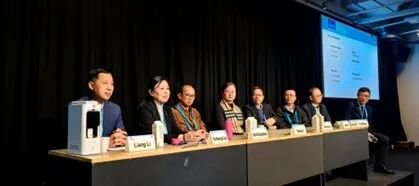
Professor Yu Pang, Director of the Scientific Research Division and Director of the Immunology and Bactereology Laboratory at Beijing Chest Hospital, first delivered an overview of China’s research progress and achievements in in vitro tuberculosis testing, particularly molecular detection technologies. He stated that a full spectrum of novel in vitro TB testing products and technologies has emerged domestically, covering all technical categories recommended by the World Health Organization (WHO) for TB in vitro diagnostics:
- Low-complexity automated nucleic acid amplification tests (LC-aNAATs) for initial MTB/RIF detection: Ustar’s MultNAT System
- LC-aNAATs for standalone initial MTB detection: Coyote’s FlashDETECT System, Ustar’s EasyNAT System, and Pluslife’s MiniDock System
- Moderate-complexity nucleic acid amplification tests (MC-NAATs) for MTB detection: Hugo Biosciences’ TB-EASY Assay System
- Lateral flow lipoarabinomannan (LF-LAM) immunoassays for TB infection screening: Leidebio's AIM-LAM
- Blood-based TB interferon-gamma release assays (IGRAs) for TB infection testing: Leidebio’s two IGRAs products, AIMTB (FLF) and AIMTB (ELISA)
- Targeted next-generation sequencing (tNGS) for drug resistance gene detection: Shengting Medical’s TBseq and Hugo Biosciences’ TB-Pro Assay
Meanwhile, multiple technologies including Hugo’s TB-EASY, Coyote’s FlashDETECT and Pluslife’s MiniDock Ultra have demonstrated robust performance in detecting TB from non-sputum specimens such as tongue swabs in clinical and real-world studies.
The session drew widespread attention for two core strengths: demand-driven design and evidence-based validation. Ms. Xiang Li, Founder and CEO of Coyote Bioscience, explained that the FlashDETECT System was engineered to meet deployment needs in resource-limited, high-TB-burden regions, featuring a compact modular framework and integrated reagent kits that complete the full workflow from sample collection and pre-processing to detection within 10 minutes. The highly integrated design drastically improves testing stability under harsh field conditions, with detection accuracy unaffected by intense physical shaking.
Dr. Jianrong Lou, Founder and CEO of Leide Biotech, shared that the AIM-LAM and AIMTB IGRA series were also developed for deployment in resource-scarce high-burden settings via miniaturized, modular and integrated architectures. The products require no advanced laboratory infrastructure and expertise; frontline medical staff can operate them proficiently after being given brief training. Dr. Lou added that his team will conduct health economic evaluations across diverse clinical scenarios to identify optimal testing combinations and rational pricing strategies.
On high-quality evidence generation, Professor Bachti Alisjahbana from Indonesia presented operational and health economic research data evaluating Pluslife’s MiniDock System for TB detection in Bandung, Indonesia, furnishing programmatic-level real-world evidence proving the product’s reliability and scalability.
Professor Hongcang Gu, Co-founder of Shengting Medical Technology, stated that the company and its TBseq tNGS drug resistance sequencing platform have consistently engaged in high-quality domestic and international research while benchmarking against leading global sequencing assays. This forward-looking vision brought TBseq to the attention of the Foundation for Innovative New Diagnostics (FIND) and WHO, and it has been incorporated into WHO guidelines as the only domestically developed tNGS TB drug resistance assay endorsed by the WHO. Professor Gu extended special gratitude to the Innovation Alliance and Beijing Chest Hospital for facilitating global exhibition opportunities and research collaborations for Shengting’s products.
Dr. Long Hu, R&D Director of Hugo Biosciences, highlighted that the company maintains extensive partnerships with domestic and international TB diagnostic R&D and verification networks including Beijing Chest Hospital, the National Institute for Communicable Diseases (NICD) of South Africa, the Bill & Melinda Gates Foundation and its Global Health Labs. Deep engagement in multi-center clinical performance validation studies to generate rigorous real-world evidence underpinned the rapid global recognition of its tongue swab testing platform.
Ms. Yanqiong Zhou, R&D Director of Ustar Biotechnologies, said the company’s founding mission centers on serving infectious disease markets across the Global South. Ustar actively benchmarks its assays against landmark international frameworks such as WHO Target Product Profiles (WHO TPPs) and collaborates with leading global R&D bodies including FIND and the Bill & Melinda Gates Foundation to generate robust clinical evidence, laying the groundwork for its competitive positioning in the global public health market.
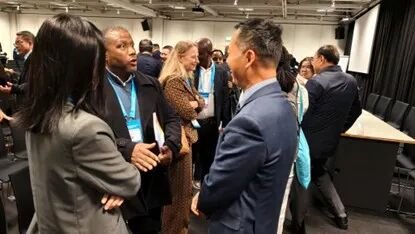
The seven presentations delivered rich content beyond product and technology showcases, incorporating abundant clinical trial outcomes and real-world implementation evidence. The audience expressed amazement at Chinese innovations and rapid technological advancements, sparking lively post-session discussions covering deployment scenarios, optimal combined testing workflows, overseas market access and affordability of diagnostic products. Attendees remained engaged in exchanges long after the official closing time.
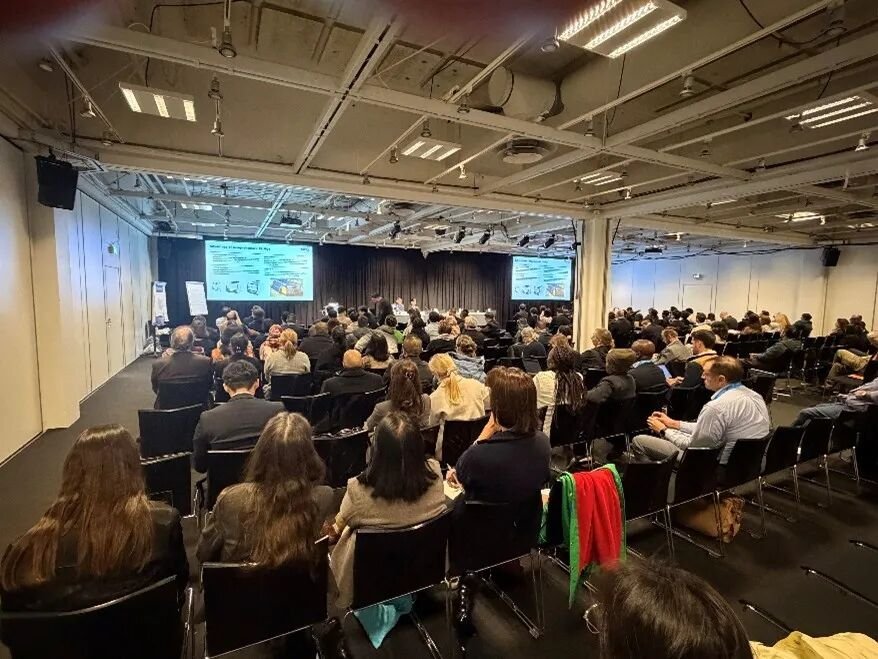
Scheduled for 17:40–19:10 on the afternoon of November 19, the session ranked among the most well-attended events of the entire conference, with the 150-seat meeting room fully occupied.
Dr. Morten Ruhwald, Chief Medical Officer of the Novo Nordisk Foundation Initiative for Vaccines and Immunology and former Head of TB Diagnostics at FIND, and Dr. Adam Penn Nicholson, current Lead of TB Diagnostics R&D at FIND, commended the Innovation Alliance’s exhibition and advocacy activities as an important gateway for global stakeholders to track China’s progress in TB in vitro diagnostics. Dr. Cathy Hewison, Lead of TB Clinical Research and Diagnostics at Médecins Sans Frontières (MSF), described the session as the most comprehensive and valuable agenda at this year’s Union Conference, expressing shock at the speed of China’s R&D pipeline and the rigor of its clinical evidence. Dr. Amy Steadman from the Bill & Melinda Gates Foundation Global Health Labs noted that both the 2024 Bali conference and 2025 Copenhagen event have established the Innovation Alliance as the premier channel for global stakeholders to access China’s TB diagnostic development pipeline. Dr. Michael Campbell, Senior Lead of Global TB R&D at the Clinton Health Access Initiative (CHAI), offered sincere praise for the systematic, comprehensive showcase of Chinese innovative TB IVD technologies, noting its profound reference value for the global TB prevention and control community. Dr. Anne-Laure Page, Lead of the WHO IVD Prequalification Performance Evaluation Laboratory Network (WHO IVD PQ PEL), remarked that a large proportion of the TB diagnostic products presented at the session hold clear potential to undergo WHO IVD prequalification. The WHO PQ team acknowledged that Chinese IVD products will dominate the prequalification pipeline for years to come and expressed willingness to deepen collaboration with the Innovation Alliance and Beijing Chest Hospital on IVD prequalification advocacy.
Distinguished guests in attendance also included Professor Jian Du, deputy director of the Beijing Chest Hospital; Professor Ming Xu, Director of the Department of Global Health, Peking University School of Public Health; Professor Ye Hu, Dean of the School of Biomedical Engineering, Tsinghua University; Professor Wenhong Zhang, Director of the Department of Infectious Diseases, Huashan Hospital, Fudan University; and numerous experts and scholars from the Bill & Melinda Gates Foundation (BMGF), Clinton Health Access Initiative (CHAI), Stop TB Partnership, and the Program for Appropriate Technology in Health (PATH). The session fostered a vibrant academic atmosphere with dynamic dialogue, achieving far greater success than anticipated.
In closing, Professor Yuhong Liu, Vice Chairman of the Innovation Alliance, pointed out that substantial gaps remain in meeting key TB elimination milestones, particularly targets for case detection and diagnosis. Validating and scaling affordable, accurate TB in vitro diagnostic tools adaptable to resource-limited high-burden settings will remain a core priority for years to come. The Innovation Alliance stands ready to collaborate with all partners committed to ending TB, creating more opportunities for high-quality evidence generation, building more professional global exhibition platforms, streamlining communication between technology suppliers and end users, and delivering win-win outcomes on the journey toward tuberculosis elimination.
Reporter: Chen Zi, Innovation Alliance
Reviewer: Yuhong Liu, Innovation Alliance