
Successful Inaugural China-Malaysia Forum on Peri-operative Management of Tuberculosis Infection in Kidney Transplant Recipients
March 16, 2026, the inaugural China-Malaysia Virtual Webinar on Peri-operative Management of Tuberculosis Infection among Recipients of Kidney Transplants was successfully held online. The conference was hosted by the Innovation Alliance on Tuberculosis Diagnosis and Treatment (Beijing, hereinafter, the alliance), co-organized by Astellas Malaysia, and academically supported by the Malaysian Society of Nephrology and the Malaysian Society of Transplantation.
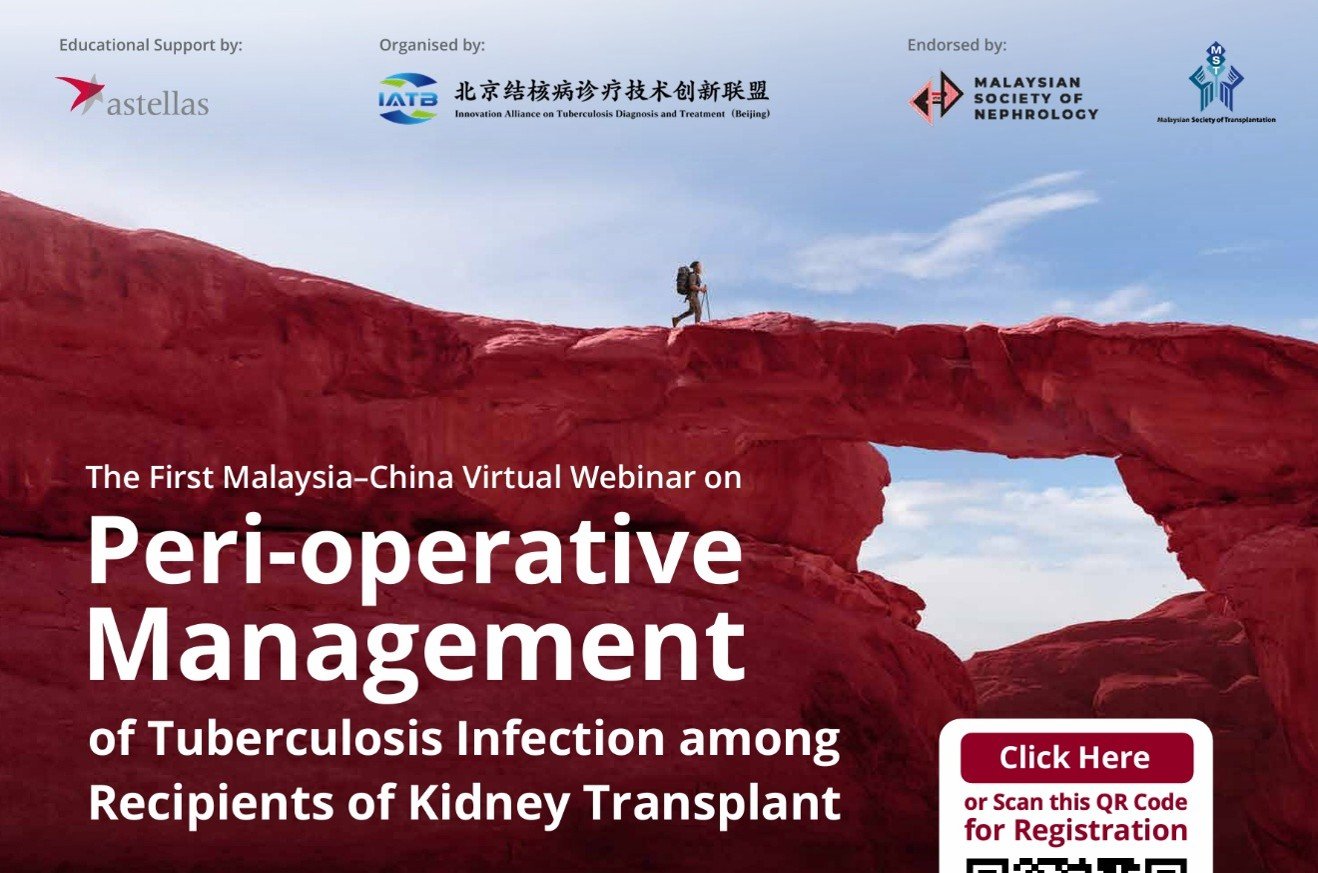
The online seminar was moderated by Mr. Xiaochun Wang, Deputy Secretary-General of the alliance.
In their opening remarks, Professor Yuhong Liu, Chairwoman of the alliance, and Professor Soo Kun Lim, Chairman of the Malaysian Society of Nephrology and the Renal Center of the University of Malaya Medical Research Center, emphasized that the management of tuberculosis infection after kidney transplantation is a crucial factor in the long-term survival and quality of life of transplant recipients. Due to the state of immunosuppression before and after surgery, this population is more prone to tuberculosis infection and active tuberculosis disease (pulmonary and extra-pulmonary) than the general population. Differential diagnosis and anti-tuberculosis treatment (whether TB Preventive treatment [TPT] or chemotherapy for active tuberculosis) are fraught with various challenges. The two experts hoped that the online academic exchange would enhance exchange and scientific research interaction between the two countries in the aforementioned fields, and explore cooperation opportunities.
In their opening remarks, Professor Yuhong Liu, Chairwoman of the alliance, and Professor Soo Kun Lim, Chairman of the Malaysian Society of Nephrology and the Renal Center of the University of Malaya Medical Research Center, emphasized that the management of tuberculosis infection after kidney transplantation is a crucial factor in the long-term survival and quality of life of transplant recipients. Due to the state of immunosuppression before and after surgery, this population is more prone to tuberculosis infection and active tuberculosis disease (pulmonary and extra-pulmonary) than the general population. Differential diagnosis and anti-tuberculosis treatment (whether TB Preventive treatment [TPT] or chemotherapy for active tuberculosis) are fraught with various challenges. The two experts hoped that the online academic exchange would enhance exchange and scientific research interaction between the two countries in the aforementioned fields, and explore cooperation opportunities.
During the formal lecture session, Professor Qiang Wang, a member of the Kidney Transplantation Group of the Organ Transplantation Branch of the Chinese Medical Association, Standing Committee Member of the Organ Transplantation Branch of the Beijing Medical Association, and Director of Urology and Transplantation Center of Peking University People’s Hospital, gave a detailed introduction to the “Guidelines for Tuberculosis Management after Kidney Transplantation Recipients” compiled by domestic experts in 2023. The entire guideline revolves around 10 common clinical problems in the diagnosis and treatment of tuberculosis infection and active disease in kidney transplant recipients after surgery, and provides 21 evidence-based recommendations. Professor Wang pointed out that China is a country with a high burden of tuberculosis, and the success or failure of peri-operative tuberculosis management for organ transplantation has a significant impact on the long-term survival of recipients and the rate of graft loss. Organ transplant recipients have four distinct TB epidemiological characteristics, namely high incidence, high mortality, high graft loss rate, and early onset. In terms of diagnosis, it is necessary to obtain positive bacteriological evidence of the patient as much as possible, and at the same time refer to immunological, radiological, pathological evidence to ascertain the nature of TB infection (LTBI or active disease), lesion location, and drug susceptibility of the pathogen. In terms of anti-tuberculosis treatment, attention should be paid to the interaction (DDIs) between anti-tuberculosis drugs and immunosuppressants (anti-rejection drugs) to form a safe and effective regimen. In terms of prophylactic medication (TPT), it is recommended that patients with LTBI complete TPT treatment before transplantation as much as possible, and prioritize the use of short-course TPT regimens, so as not to affect the timing of recipients receiving organ transplantation.
Professor Soo Kun Lim, a senior kidney transplant expert from the Faculty of Medicine of the University of Malaya, gave a report entitled “Infection Prevention and Control after Organ Transplantation in Malaysia: Clinical Practice, Challenges and Gaps.” Professor Lim pointed out that infection after kidney transplantation is a major risk leading to graft failure and patient death. The core of its management lies in balancing the “immunosuppressive net state” of rejection and infection. Professor Lim systematically sorted out the evolution of infection in different stages after surgery (early surgery-related, mid-term opportunistic infection, late community-acquired), common pathogens (such as UTI, CMV, BK virus, and Mycobacterium tuberculosis) and high-mortality threats (such as invasive mold), and pointed out the many clinical challenges and scientific research gaps currently faced in the speed of opportunistic infection diagnosis, effectiveness of prevention strategies, and individualized treatment after transplantation. Finally, Professor Lim looked forward to achieving a shift from standardized programs to dynamic and individualized precision management strategies through rapid molecular diagnosis, dynamic monitoring of immune status with biomarkers (such as TTV), and targeted therapies.
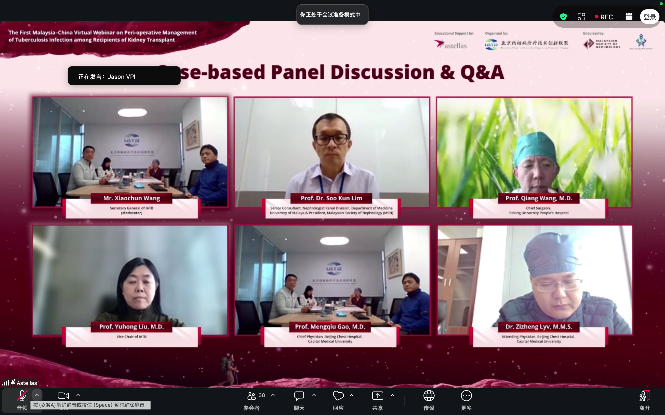
Dr. Ziheng Lv, from the No.2 TB ward of the Beijing Chest Hospital, Capital Medical University, shared a case of diagnosis and treatment of a tuberculosis patient after kidney transplantation along with his experience and insights derived from the case. Subsequently, the three speakers and the special guest, Professor Mengqiu Gao from Beijing Chest Hospital, Capital Medical University, discussed and commented on the diagnosis and treatment process, experience and lessons of this patient, and conducted in-depth discussions and answers to the questions raised by the online audience.
The online seminar had been an instant success. Experts from China and Malaysia gave insightful speeches backed up by detailed case sharing on their respective countries’ strategies for the prevention and control of opportunistic infections during organ transplantation, with a focuse on tuberculosis infection management during peri-operative period of kidney transplantation. Both sides stated that they will take this online academic exchange as a starting point to explore cooperation opportunities and expand cooperation content in related fields.
Professor Soo Kun Lim, a senior kidney transplant expert from the Faculty of Medicine of the University of Malaya, gave a report entitled “Infection Prevention and Control after Organ Transplantation in Malaysia: Clinical Practice, Challenges and Gaps.” Professor Lim pointed out that infection after kidney transplantation is a major risk leading to graft failure and patient death. The core of its management lies in balancing the “immunosuppressive net state” of rejection and infection. Professor Lim systematically sorted out the evolution of infection in different stages after surgery (early surgery-related, mid-term opportunistic infection, late community-acquired), common pathogens (such as UTI, CMV, BK virus, and Mycobacterium tuberculosis) and high-mortality threats (such as invasive mold), and pointed out the many clinical challenges and scientific research gaps currently faced in the speed of opportunistic infection diagnosis, effectiveness of prevention strategies, and individualized treatment after transplantation. Finally, Professor Lim looked forward to achieving a shift from standardized programs to dynamic and individualized precision management strategies through rapid molecular diagnosis, dynamic monitoring of immune status with biomarkers (such as TTV), and targeted therapies.
Dr. Ziheng Lv, from the No.2 TB ward of the Beijing Chest Hospital, Capital Medical University, shared a case of diagnosis and treatment of a tuberculosis patient after kidney transplantation along with his experience and insights derived from the case. Subsequently, the three speakers and the special guest, Professor Mengqiu Gao from Beijing Chest Hospital, Capital Medical University, discussed and commented on the diagnosis and treatment process, experience and lessons of this patient, and conducted in-depth discussions and answers to the questions raised by the online audience.
The online seminar had been an instant success. Experts from China and Malaysia gave insightful speeches backed up by detailed case sharing on their respective countries’ strategies for the prevention and control of opportunistic infections during organ transplantation, with a focuse on tuberculosis infection management during peri-operative period of kidney transplantation. Both sides stated that they will take this online academic exchange as a starting point to explore cooperation opportunities and expand cooperation content in related fields.
Reported by: Zi Chen, Innovation Alliance