
The Third IATB-MSF Webinar on Tuberculosis Clinical Research-TB and Pregnancy Successfully Held Online
On the evening of May 11, 2026, the third webinar themed around TB and Pregnancy jointly organized by the Innovation Alliance on Tuberculosis Diagnosis and Treatment (Beijing, hereinafter IATB) and Médecins Sans Frontières (MSF). The event received academic support from the Beijing Chest Hospital, Capital Medical University, and the Clinical Center on Tuberculosis, China Center for Disease Control and Prevention.
The webinar was moderated by Professor Liu Yuhong, Chairwoman of the alliance, and Dr. Huang Yuan, Medical Representative of MSF Beijing Office. In her opening remarks, Professor Liu stated that pregnant women and their newborns face increased risks of tuberculosis infection and onset before, during and after childbirth, and the diagnosis and treatment of tuberculosis in this population pose a wide range of challenges. This seminar invited experts from MSF and domestic medical institutions to share experiences in and out of China in managing tuberculosis complicated with pregnancy, aiming to draw mutual insights and explore opportunities for further collaboration.
Three specialists from MSF delivered presentations under the title Tuberculosis Complicated with Pregnancy: Experience from Médecins Sans Frontières, namely Dr. Cathy Hewison, Lead of the Tuberculosis Working Group, Dr. Juno Min, Radiology Specialist, and Dr. Nathalie Lachenal, Pharmacovigilance Specialist. They elaborated on the epidemiological status, diagnosis, treatment, prevention of gestational tuberculosis, as well as relevant clinical studies carried out by MSF.
The experts clarified that the radiation dose from chest X-ray examinations for pregnant patients is safe for both the mother and fetus, and fear of radiation should not dissuade pregnant women from receiving necessary radiological tests. Regarding the safety of anti-tuberculosis medications during pregnancy, most drugs are routinely administered to pregnant patients with tuberculosis based on empirical regimens, yet high-level clinical evidence supporting their use remains scarce. The presenters detailed maternal and neonatal outcomes recorded in the endTB and TB-PRACTECAL clinical trials involving pregnant participants. They emphasized the necessity of active anti-tuberculosis drug safety monitoring and management (aDSM) for severe adverse events (SAEs) such as congenital malformations and teratogenic risks in pregnant tuberculosis patients and their infants. Such monitoring should continue until pregnancy outcomes are confirmed and extend for up to 12 months after childbirth. Lastly, they proposed establishing effective referral and confirmation mechanisms linking national tuberculosis programs with maternal and child healthcare services, and highlighted the importance of raising awareness of tuberculosis screening among maternal and child health institutions to address tuberculosis in pregnancy.

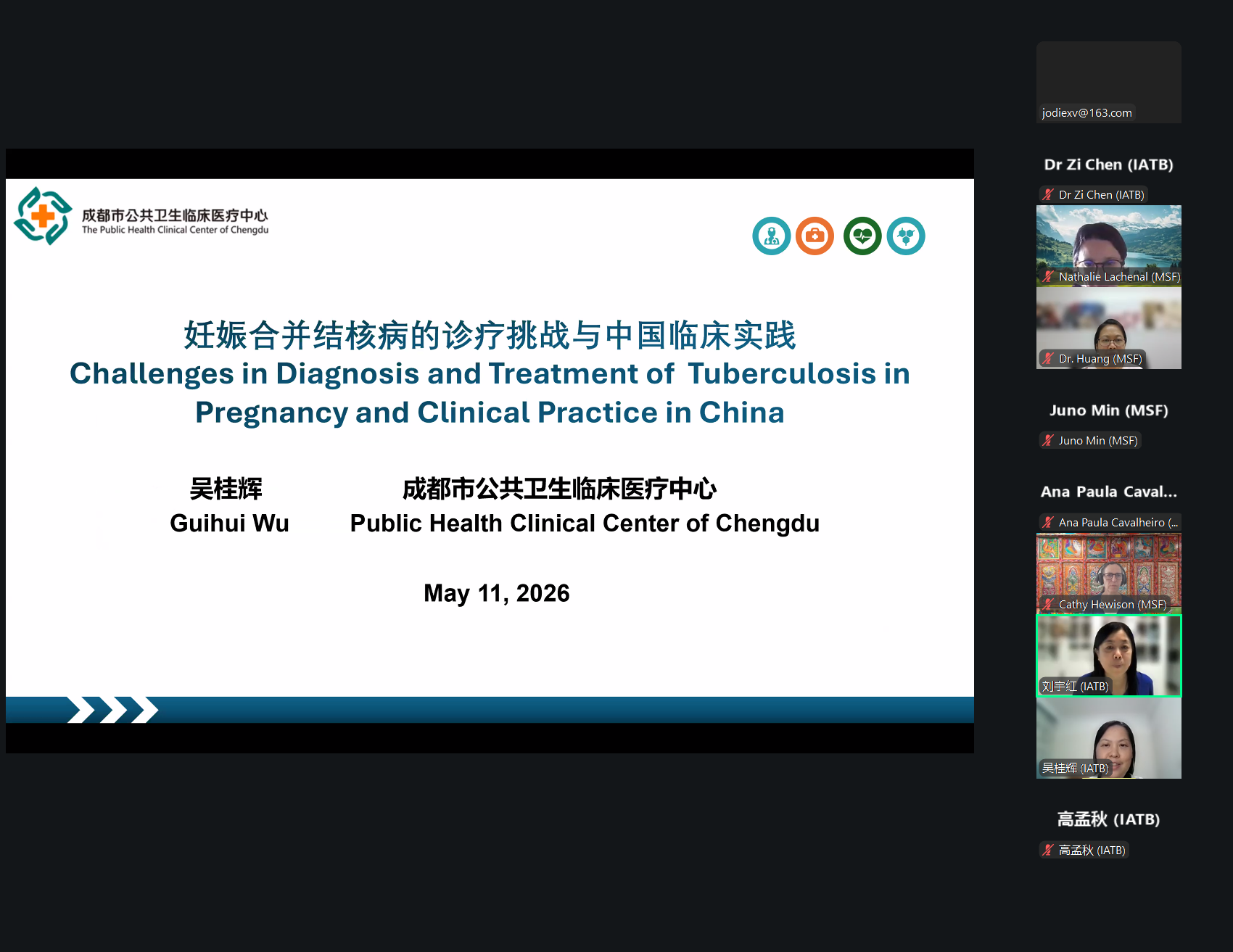
Dr. Wu Guihui, Director of the Public Health Clinical Center of Chengdu, delivered a speech titled Challenges in Diagnosis and Treatment of Tuberculosis Complicated with Pregnancy and Clinical Practices in China. She outlined the severe global and national burden of tuberculosis complicated with pregnancy, including its high incidence and severe adverse impacts on maternal and infant health such as increased maternal and neonatal mortality and unfavorable pregnancy outcomes.
Dr. Wu analyzed four core clinical challenges in managing this patient group:
- Screening and Diagnosis Challenges: ambiguous symptoms during pregnancy, obstacles to early first-trimester screening, dilemmas in latent tuberculosis infection screening, widespread misconceptions about radiation hazards from radiological tests, and the pros and cons of bacteriological diagnostic tools including smear microscopy, culture and molecular assays.
- Treatment and Medication Challenges: Conflicts between standard anti-tuberculosis regimens and physiological characteristics of pregnancy, barriers including delayed diagnosis, cumulative toxic effects of combined multi-drug therapy, uncertainties over drug safety and patient adherence, and difficulties in selecting treatment regimens for multidrug/rifampicin-resistant tuberculosis (MDR/RR-TB).
- Challenges in Blocking Mother-to-Child Transmission: Postnatal neonatal assessment, Bacille Calmette-Guérin (BCG) vaccination, and conflicts between breastfeeding and isolation protocols, accompanied by practical clinical recommendations.
- Ethical and Clinical Decision-Making Dilemmas: Ethical debates surrounding pregnancy termination when maternal conditions turn critical, and the value of multidisciplinary collaborative decision-making.
Dr. Wu shared a typical clinical case illustrating severe disease deterioration caused by misdiagnosis of tuberculosis as pneumonia. She concluded with key recommendations for clinical practice in China: scaling up screening (especially prior to assisted reproductive technology), early diagnosis, standardized treatment supported by multidisciplinary teams, and comprehensive interruption of mother-to-child transmission. She also outlined priority research directions, proposed integrated cross-departmental management frameworks, called for nationwide promotion of prevention and treatment strategies, and advocated for the establishment of a national surveillance system for tuberculosis in pregnancy.
During the panel discussion session, Professor Gao Mengqiu from Beijing Chest Hospital, Capital Medical University, Professor Wu Yuqing from Jiangxi Chest Hospital, Professor He Kejing from the Public Health Clinical Center of Chengdu, Dr. Ana Paula Cavalheiro, an expert in chronic diseases and infectious diseases at MSF, together with all speakers and moderators, held in-depth exchanges covering a broad spectrum of topics on tuberculosis in pregnancy. They responded to audience questions regarding the regimens and timing of tuberculosis preventive therapy for pregnant women, the inclusion of pregnant participants in future clinical trials, and the implications of assisted reproductive technology and egg freezing for pregnant individuals with tuberculosis.
Over 100 global online attendees participated in the webinar, which concluded successfully and received great feedbacks from all experts and participants. Moving forward, the Innovation Alliance will continue to organize more academic exchange events jointly with MSF to discuss diverse topics related to tuberculosis clinical research.
Report by Chen Zi